
Finance
The Customer Who Owes You and the Supplier You Owe Are the Same Problem
8 min read

It is late. The shop is closed. You are sitting with the notebook open on the table, running your finger down the page, trying to remember.
This name owes you. From when — last month? The month before? The amount is here, but the date is a guess. This one paid half; you think. This one you are not sure about at all. There is a man who has owed you since the cold season and every time he comes in he is warm and friendly and somehow you never quite manage to ask. You do not want to seem small. You do not want to lose him. So you say nothing, and he buys again, on credit, and the number grows.
Your phone rings. It is a supplier. His voice is polite but tight. There is an invoice, he says. It is overdue. You had forgotten it completely — it was in the drawer, or in your head, in the place where things go to be forgotten. You apologise. You promise to sort it this week. You hang up and sit in the quiet.
And here is the thing you feel but have never put into words. The money that man owes you is the money you owe your supplier. It is the same money. You are standing in the middle of it, holding neither end, and the weight of both is pressing on the same spot in your chest.
Money has an age, and it is dying
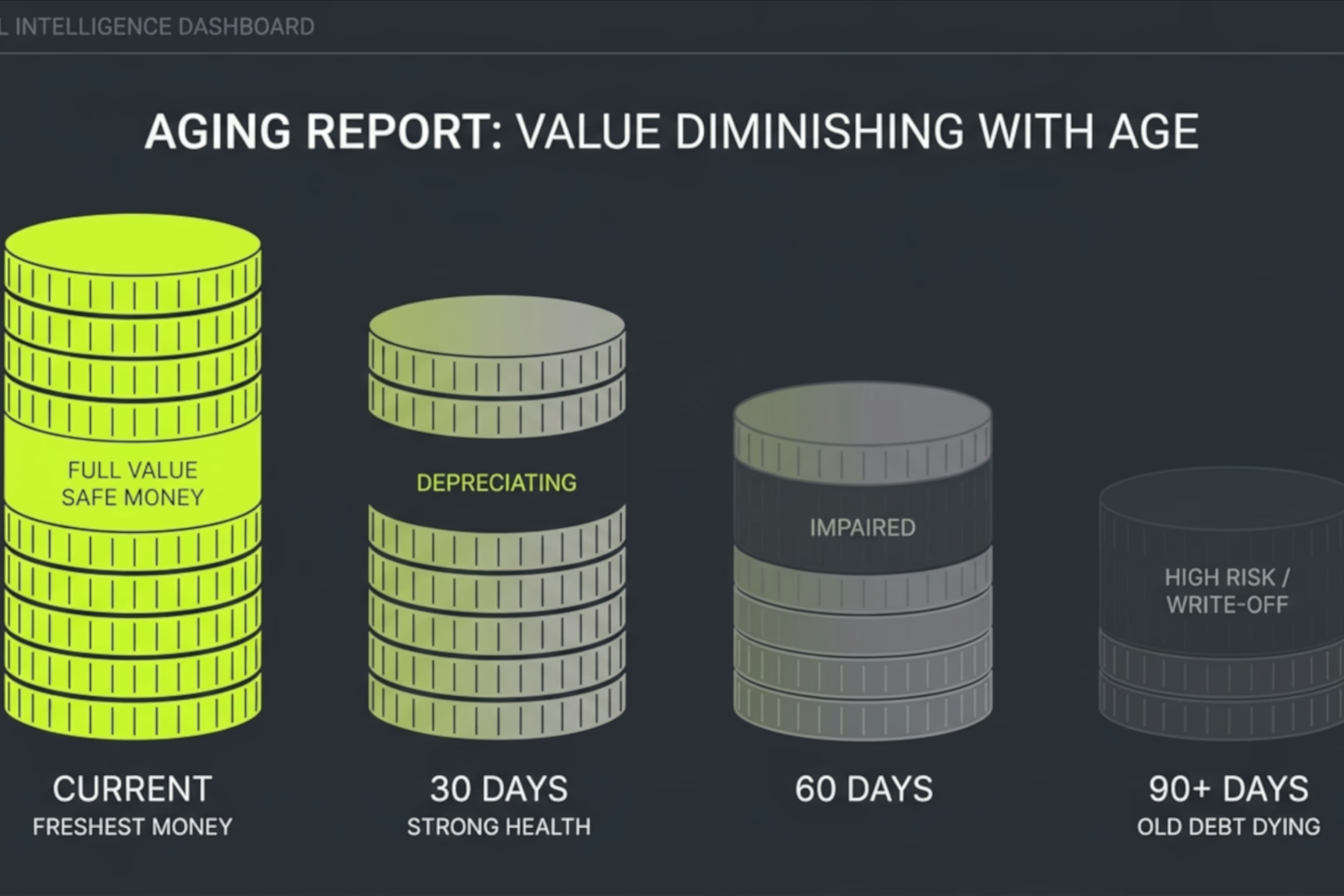
Every debt has a birthday. The day the sale was made on credit. The day the invoice was issued. From that day, the money begins to age — and unlike wine, it does not improve.
Money that is owed to you is freshest the day it is owed. In the first days, it will almost certainly come. Give it thirty days, and some of it starts to slip. Sixty days, and a real portion is now in doubt. Ninety days and beyond, and much of it is quietly gone — not stolen, not refused, just aged past the point where anyone still expects to pay it or be asked.
This is not cynicism. It is simply what happens. The older a debt gets, the colder it gets, and cold debts are rarely collected. The customer forgets. The urgency fades. The relationship makes it awkward. And a number that was once real money becomes a number that is just a number.
To see this, you sort what you are owed by age. The debts born this week, in one column. Those thirty days old, in the next. Sixty. Ninety and over. When you lay it out this way, something that was a fog becomes a map. You can see, at a glance, how much of your money is fresh and safe, and how much is old and slipping toward the grave. You stop guessing. You start knowing.
And the same map works in the other direction. What you owe has an age too. And your suppliers are reading it, even when you are not.
The two faces are one face

The customer who owes you and the supplier you owe feel like two separate worries. They are not. They are the two ends of a single flow of cash that runs through your business, and you are the point where it either moves or gets stuck.
When your customers pay you slowly, the cash arrives at your door late. When you pay your suppliers, the cash leaves. If what leaves must go before what arrives comes, you have a gap — and that gap is filled with worry, with borrowing, with the small daily indignity of not being able to pay for something you have genuinely earned.
So the two problems are really one question, asked twice. How do I get what I am owed, faster? And: how do I manage what I owe, wisely? Solve them together and the flow runs smooth. Solve neither and you spend your life, as you did that late night, holding a notebook in one hand and a ringing phone in the other, owing and being owed and unable to rest.
Keeping the young debts young
The whole game is to stop your debts from getting old. Not to chase old debts — though you must — but to keep new ones from ever becoming old. And this is done with small, unglamorous habits, practiced without exception.
Invoice the moment the sale is made. Not tonight. Not when you get around to it. Now, while it is real to both of you. A debt with no clear record and no clear date is a debt already halfway to forgotten.
Set the terms out loud, at the start. "This is due in thirty days." Said plainly, at the moment of the sale, when goodwill is high and nobody is defensive. Terms agreed after the fact are not terms. They are arguments waiting to happen.
Follow up early, and follow up warmly. A gentle word at seven days. A clear reminder at twenty-one. This is not harassment — it is the opposite. The owner who reminds early, kindly, and consistently trains their customers to pay on time, and keeps the relationship warm while doing it. The owner who says nothing for sixty days and then explodes has damaged both the money and the friendship.
And here is what to say, because not knowing what to say is why most owners say nothing at all. You do not accuse. You do not beg. You simply state the fact, kindly: "Good afternoon. I'm just going through my accounts and I see the invoice from last month is due. When would be a good time to settle it?" That is all. Warm, clear, and impossible to take offence at. Most people pay when reminded like that. The ones who don't have told you something you needed to know.
For what you owe, the rule is the mirror image. Pay within your terms to protect your name, because your name is the credit you will need later. And when cash is genuinely tight, speak to the supplier early — before the invoice is overdue, not after. Suppliers respect an owner who says "I'll be a week late, here's my plan." They lose faith in one who simply goes silent. Honesty buys you time. Silence spends it.
The trapped cash from the last story
Do you remember the paradox from the article before this one? The business that was profitable on paper and broke in the hand. The owner who made the sale, recorded the profit, and still could not pay the rent on Friday.
This is where that trapped cash lives.
The profit and loss said you earned money, and it was telling the truth. Your bank balance said you had none, and it was also telling the truth. The distance between those two truths is your aging debtors report — the money you have genuinely earned, sitting in other people's pockets, growing older by the day.
Most small businesses that close do not close because they could not sell. They close because they sold, and earned, and then could not collect fast enough to survive the wait. The sale was never the problem. The collection was. More businesses are killed by the gap between earning and receiving than by any shortage of customers.
That is why this is the hardest and the most important of the four. Sales, stock, expenses, reports — all of them lead here, to the simple, brutal question of whether the money you are owed ever actually reaches your hand while there is still a business to receive it.
The notebook forgets. The system does not.
Think about that late night again. The finger on the page. The uncertain dates. The friendly man who has owed you since the cold season. The whole exhausting effort of trying to hold, in a tired mind, something that a mind was never built to hold.
The problem was never that you did not care. It was that you were asking your memory to do a clerk's job, and memory is a poor clerk. It forgets the dates. It softens the amounts. It shrinks from the awkward conversation. It loses the young debts before they can be collected and lets them quietly grow old.
Masanchara does the clerk's job so your mind can do yours. Every credit sale is recorded the moment it happens, with its true date, so no debt is ever born already forgotten. What you are owed sorts itself by age, on its own — fresh, thirty, sixty, ninety — so the map is always in front of you, the fog never returns, and you always know exactly who to call today, before a debt gets old enough to lose. And what you owe sits in the same clear view, so you see both ends of the flow at once and are never again surprised by a polite, tight voice on the phone.
You stop carrying it. You simply read it.
The notebook forgets. The system does not.

You earned that money already. It is time it came home.