
Finance
Every Receipt You Lose Is a Tax Deduction You'll Never Get Back
7 min read
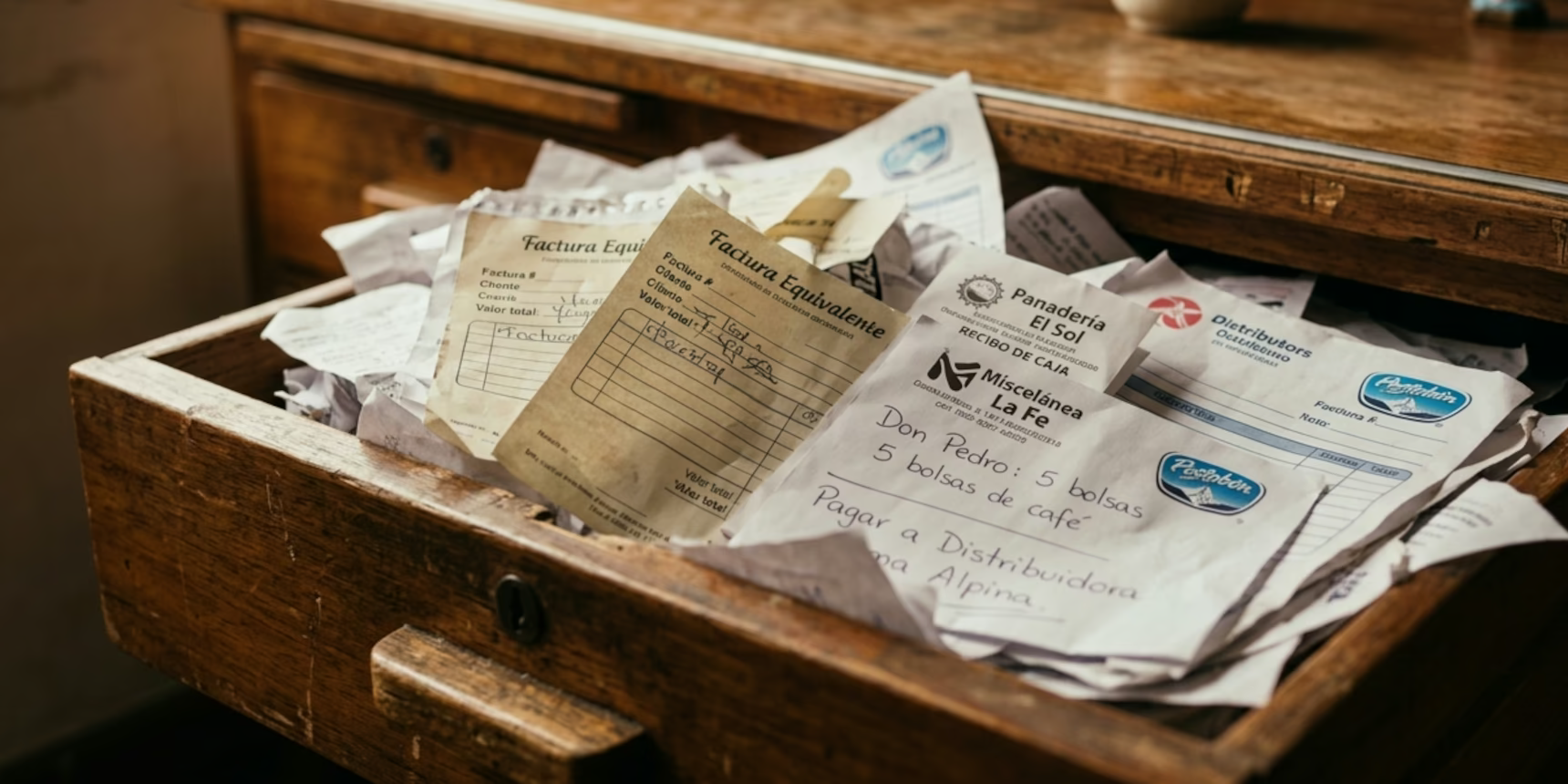
The drawer will not close.
It is full of paper. Curled receipts, faded slips, a delivery note folded in half, three bank confirmations, a scrap where you wrote a number in pen and cannot now remember what it was for. Every few weeks you tell yourself you will sit down and sort it. You never do. The drawer fills, and closes less easily, and you push it shut with your hip and move on.
Then the day comes when you need it. The tax office asks. Or the bank wants to see the year. Or a business partner leans across the table and asks, gently, where the profit went. You open the drawer. You look at the paper. And you feel it — that particular sinking, the mix of dread and quiet shame that every business owner knows and none of them talk about.
Here is the thing nobody says out loud. This is not because you are lazy. It is because the habit was never built, and the habit was never built because the tool was never easy enough to make it worth building.
The three kinds of money leaving
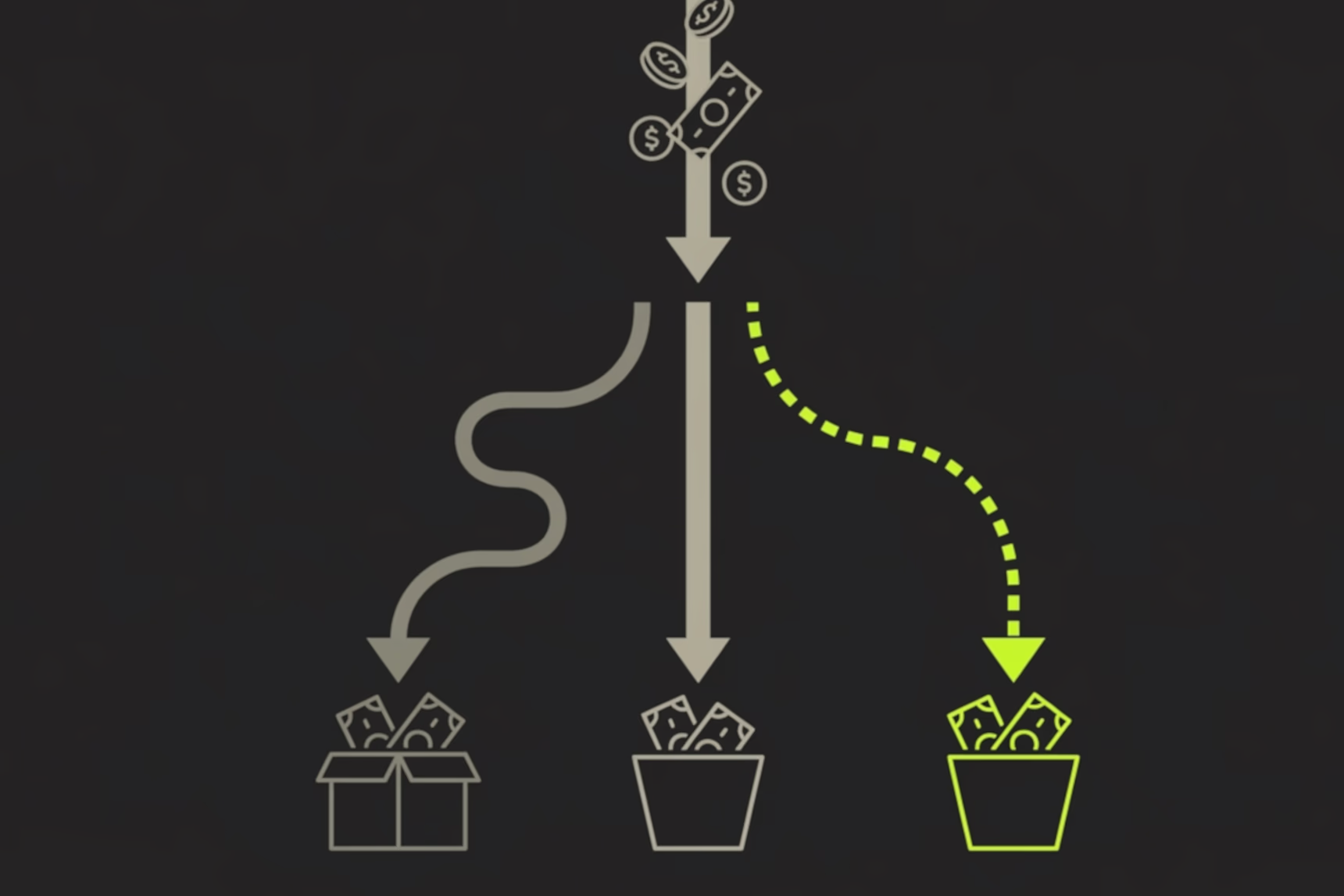
Money leaves your business every day. But it does not all leave the same way, and treating it as one flow is the first mistake.
There are three kinds of money going out, and once you can see them separately, your whole business becomes easier to steer.
The first is the cost of what you sell. When you buy stock to resell, that is not really a loss — it is money changing shape, waiting to come back with a profit attached. It rises when sales rise and falls when they fall. It moves with the business. Accountants call it cost of goods sold, but you do not need the term. You only need to know that this money is tied directly to the till, and it behaves like a shadow of your revenue.
The second is the cost of keeping the doors open. Rent. Electricity. Wages. Water. Transport. Airtime. These costs arrive whether you sell one item or one thousand. They are the price of simply existing as a business this month. They are mostly fixed, mostly predictable, and mostly ignored until one of them quietly grows and nobody notices.
The third is the money you choose to spend. New equipment. A sign for the front. A course. An advertisement. This is the money you have the most control over, and therefore the money that tells the truth about your judgement. When times are good, this is where you invest. When times are hard, this is where you cut first — but only if you can see it clearly, separated from the other two.
A business that lumps all three together into one number called "expenses" is flying blind. When trouble comes and the owner needs to cut, they cannot tell what is safe to cut and what is the artery. They cannot tell the shadow of revenue from the price of the doors from the spending they chose. Three very different kinds of money, wearing one disguise.
The line you keep crossing

There is one expense mistake so common that it almost defines the small business, and it has nothing to do with tracking. It is the line between your money and the business's money.
You take a little cash from the till for lunch. You pay a supplier from your personal account because the business account was short that day. Your child needs school fees, and the shop had a good week, so you take it. None of these feel wrong. Each one, on its own, is small and reasonable.
But every time you cross that line without recording it, you make your business impossible to read.
Because now the business account shows money going out that was not a business cost. And your personal account shows money going out that was. The two are braided together, and no report built on them can be trusted. You will look at your own numbers and not know whether the business is healthy or sick, because the numbers are describing two lives at once.
The fix is not complicated, but it requires discipline. One account for the business. One account for you. When money moves between them, it has a name — you are either paying yourself, or lending the business a hand — and you record it under that name, every time. The money can still flow both ways. It just has to flow through a door with a label on it, not a hole in the wall.
Do this, and something quiet and powerful happens. Your business becomes a separate thing from you. You can finally see it on its own — its own health, its own weight, its own worth. And a business you can see clearly is a business you can grow, sell, borrow against, or hand to your children. A business braided into your personal life is just a job that owns you back.
Where the receipts were always going
Think back to the last two articles for a moment.
You learned that a sale is not one number — it is what sold, at what cost, at what price. You learned that every sale should subtract from your stock, so you always know what you have. Now add the third stream, and the picture completes itself.
Your sales, minus the cost of what you sold, is your gross margin — the profit from the trading itself. Your gross margin, minus the cost of keeping the doors open and the money you chose to spend, is your net margin — what is actually left. What you truly earned.
You already have two of the three pieces. The sales you can see. The cost of goods flows from the stock. The expenses are the last stream, and until they are captured — categorised and kept apart from your personal life — the equation cannot resolve. You will never be able to answer the simplest and most important question a business owner can ask.
Am I actually making money?
Not "does it feel busy." Not "is the till full on Fridays." A number. A real one. That number lives at the end of the expense trail, and it cannot be reached with a drawer full of curled paper.
Captured once, worth all year
There is a moment, right after you spend, when the receipt is worth the most it will ever be worth. It is in your hand. You know exactly what it was for. You know the amount, the date, the reason. Everything about it is fresh and true.
Then it goes into the drawer, and every day it loses value. The ink fades. The context slips. The reason blurs. Three months later it is a puzzle. A year later it is landfill, and the deduction it represented — the tax you could have saved, the cost you could have proven — is gone with it.
Masanchara catches the receipt at its most valuable moment. You record the expense the moment you spend it — the amount, the category you choose, the reason, a photo of the slip if you want one — and it is done. Filed, dated, categorised. Your cost of goods is already separated automatically, because it's tied directly to what you actually sold and restocked — you don't have to remember to split that part out by hand. Everything else sits exactly where you put it, ready to flow into the reports that finally answer the question.
You do it once, in the moment it costs you nothing to do, and it works for you for the rest of the year.
The receipt is worth more recorded than remembered.

The drawer does not hold your expenses. It buries them.