
Engineering
A Record That Tells the Truth: Why Your Ledger Needs More Than a Backup
2 min read

Most business software treats your ledger like a chalkboard. If a person knows how, they can take an eraser, wipe away a row, and write a new number. The board looks the same, but the truth is gone.
Money shrinks. Disputes arise. Someone quietly changes last month's sales, and a simple backup will not catch the thief. Backups only save the board as it looks today; they do not tell you what was erased yesterday.
The Ma$anchara ledger does not use a chalkboard. It uses a chain.
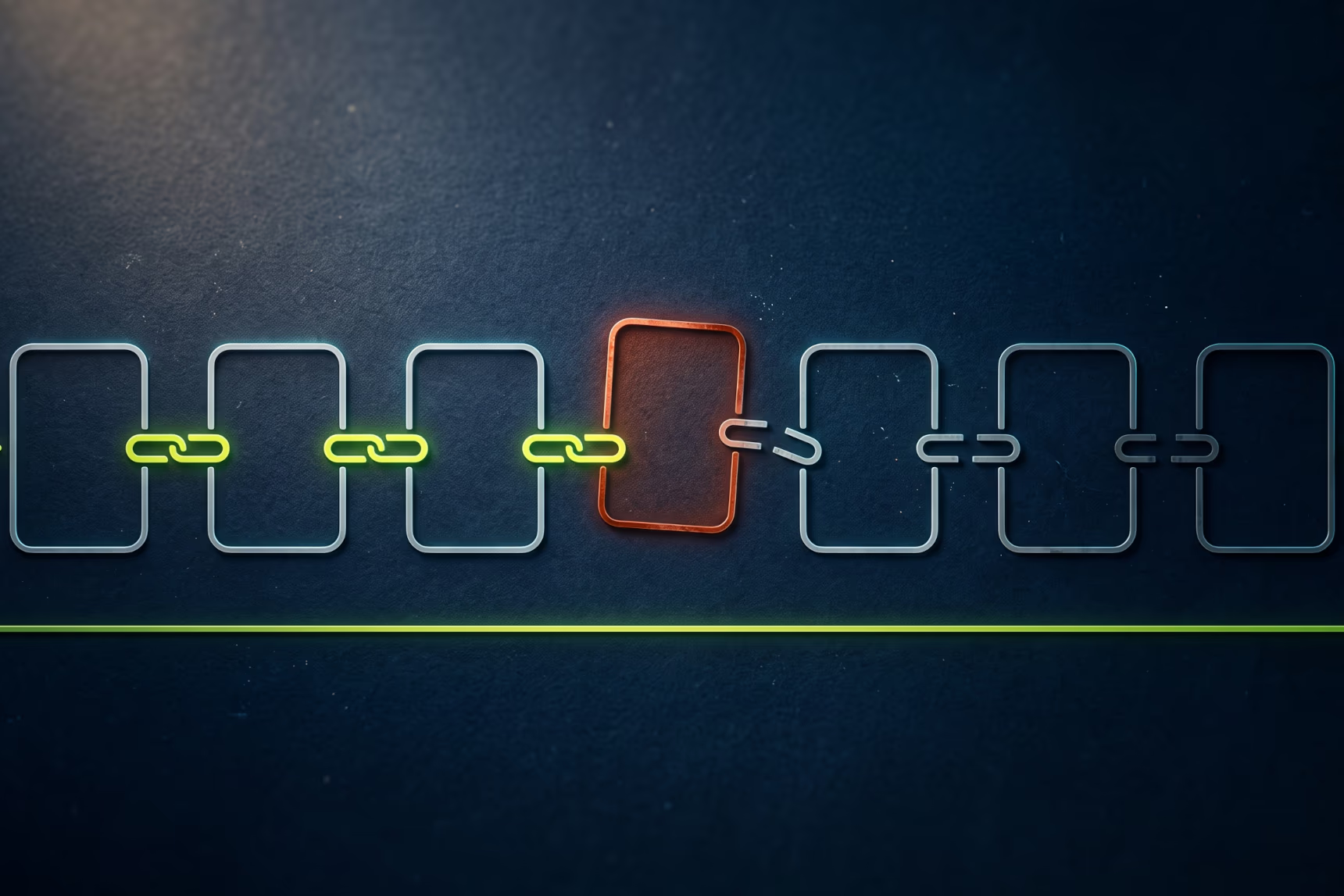
When a transaction happens, the engine writes it down and seals it with a mathematical lock, called a hash. But it does not just lock that single entry. It weaves the new data together with the lock from the entry right before it.
If someone goes back and changes a single historical cent, the chain breaks. Every lock that follows snaps. There is no quiet edit. The break is mathematically visible to anyone who looks.
In the daily rhythm of running a business, this provides three absolute certainties:
- The Seal: Every single action—a sale, a stock adjustment, a payment—is locked with a SHA-256 hash the moment it happens, forever tied to the past.
- The Independence: You do not need the cloud to prove your truth. The chain checks itself, completely offline and right on your device.
- The Evidence: If a lock breaks, it is not an ambiguity. It is proof. You know exactly which entry severed the chain.
People often talk about keeping an audit trail. But an audit trail is merely a record, and records can be quietly rewritten. We call this cryptographic integrity. It is a record that tells you if it has been touched.